
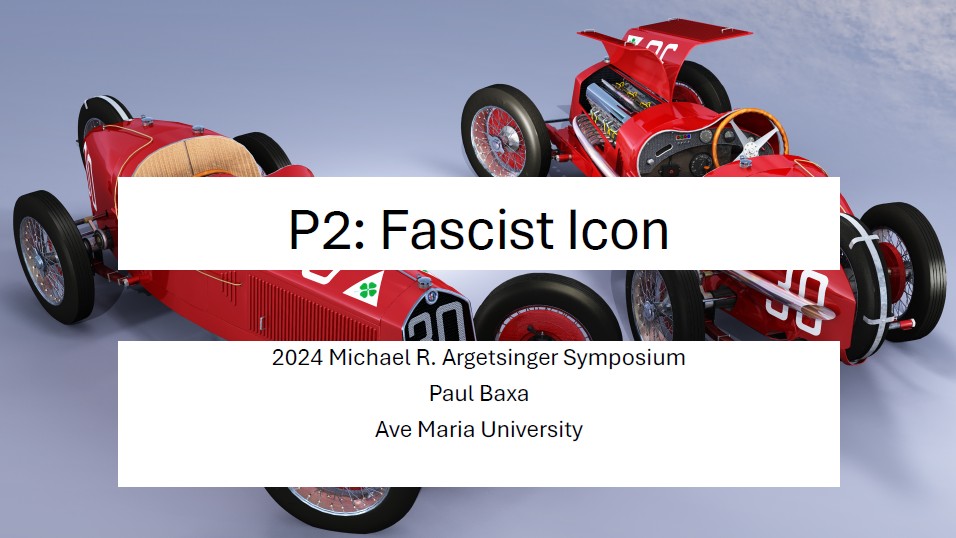
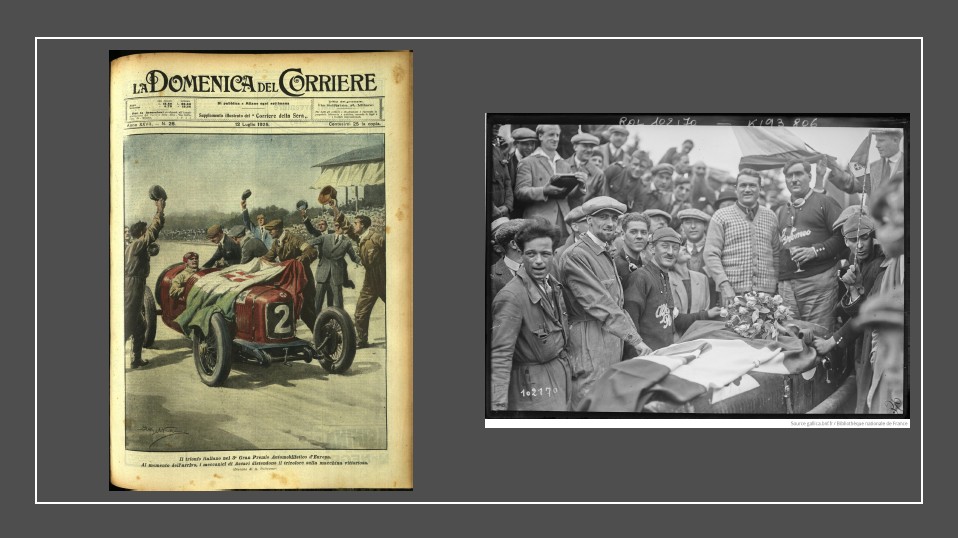
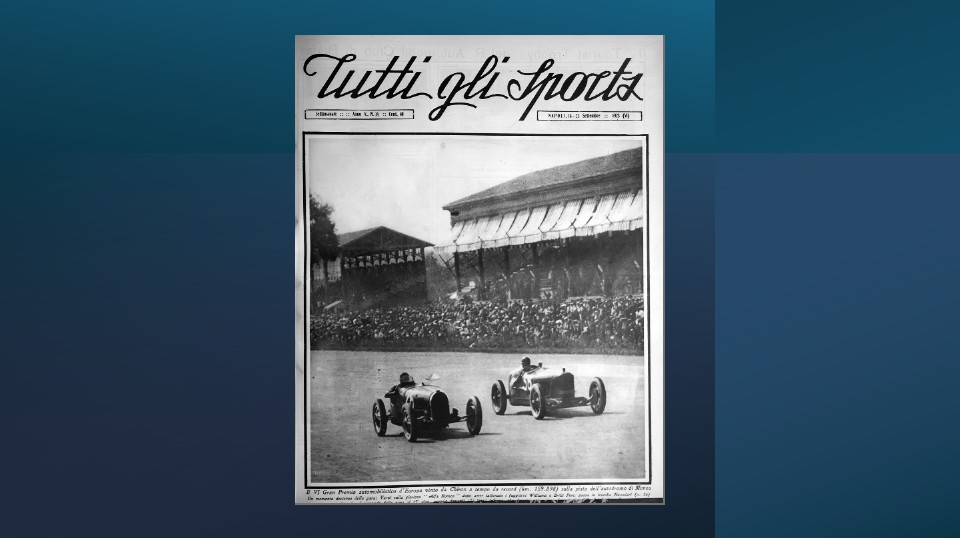
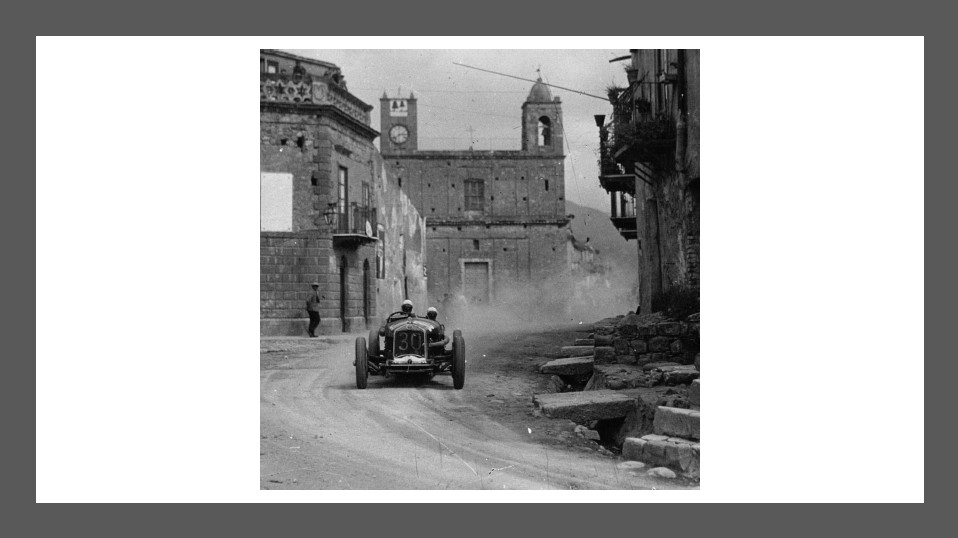
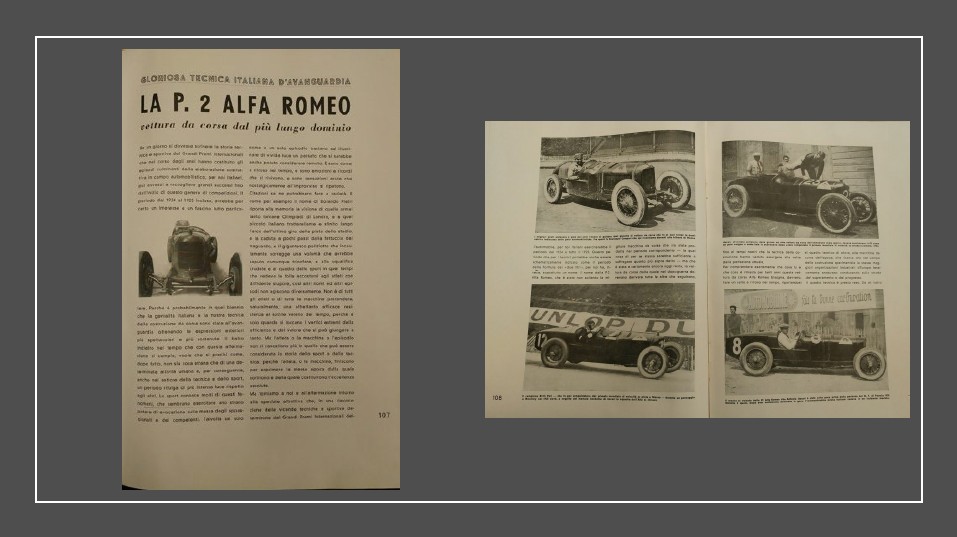
This year will mark the 100th anniversary of the iconic Alfa Romeo P2’s debut. Designed by the legendary Vittorio Jano, the P2 went on to dominate Grand Prix racing in the final two years of the 2-Liter formula. In 1925, Alfa won the first World Championship after which the team duly withdrew from the sport. However, privately owned Alfa P2s continued to participate in racing and win races up until 1930. The sporting achievements of the Alfa P2s are well known, as is the role the car played in establishing Alfa Romeo as Italy’s most famous racing marque up until the advent of the Second World War.



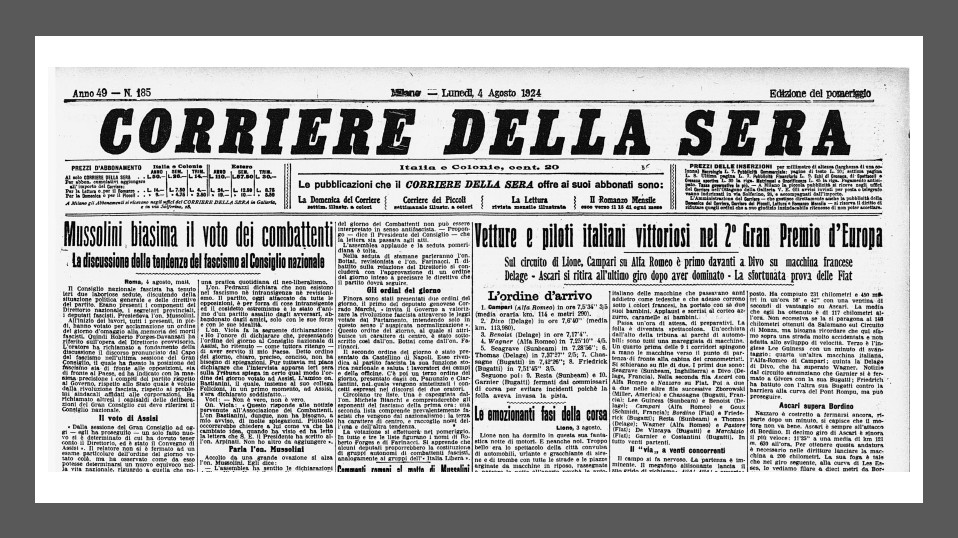
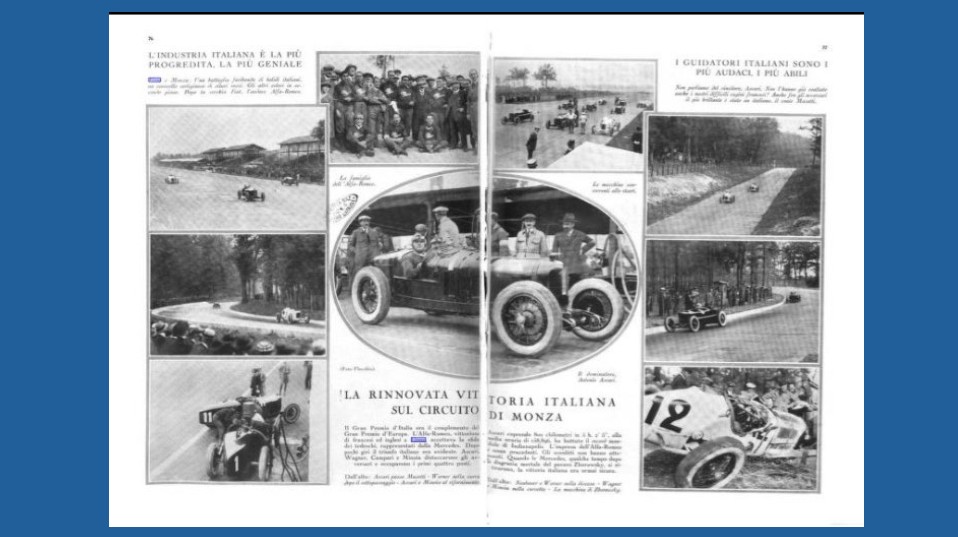
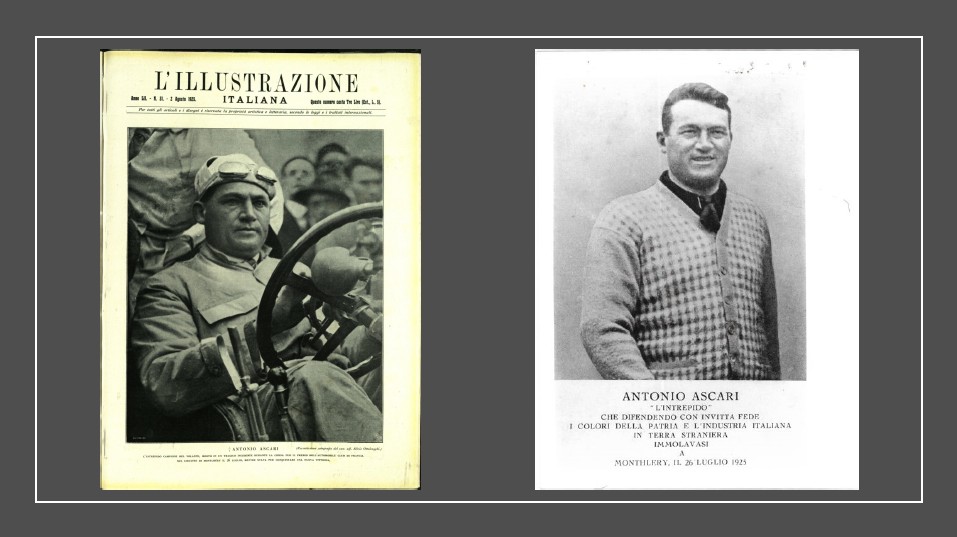
Less known is the broader significance of the P2 that went well beyond the racetrack. Informed by the history of objects developed by cultural historians, this paper argues that the P2’s significance was industrial, cultural, and ultimately political. The achievements of the P2 and the emergence of the Milanese based Alfa company coincided with the establishment of Mussolini’s dictatorship in Italy. The Fascist regime used the Alfa’s successes to celebrate the rise of Fascist Italy as an industrial and sporting power. Moreover, the unique characteristics of the P2 came to embody the values promoted by fascism such as speed and dominance. Both the design and performance of the car, as well as the men who raced it, came to shape not only Grand Prix racing in the 1920s, but also impacted the role played by the sport in the political and cultural context of Fascist Italy.
Bio

Paul Baxa is Professor of History at Ave Maria University in Florida. Parts of his most recent book, Motorsport and Fascism: Living Dangerously have been presented at past Argetsinger Symposia. He was privileged to have presented at the first symposium in 2015.
Slides
Swipe left or right (or use the arrows/dots) to navigate through the presentation slides as you follow along with the episode.








This episode is sponsored in part by: The International Motor Racing Research Center (IMRRC), The Society of Automotive Historians (SAH), The Watkins Glen Area Chamber of Commerce, and the Argetsinger Family – and was recorded in front of a live studio audience. And has been Edited, Remastered and Produced in partnership with the Motoring Podcast Network.
Other episodes you might enjoy